Well report · filed November 19, 2026
Petroleum MarketsWell report
Five Tankers Ablaze After Mine Strikes in Strait of Hormuz
Five tankers are ablaze after mine strikes in the Strait of Hormuz, per Iranian military claims; IRGC says two supertankers were under US jet escort on an 'unauthorised route.'
Field notes
- Five tankers reported ablaze after mine strikes in and around the Strait of Hormuz, reported 19 Nov 2026.
- IRGC Navy says two supertankers, escorted by US jets, hit mines on an 'unauthorised route' in the southern strait.
- Iran's army says three tankers are on fire after mine strikes east of the strait.
- President Pezeshkian accused Iran's enemies of 'cultural and economic war' and vowed: 'We must continue on our path and not retreat.'
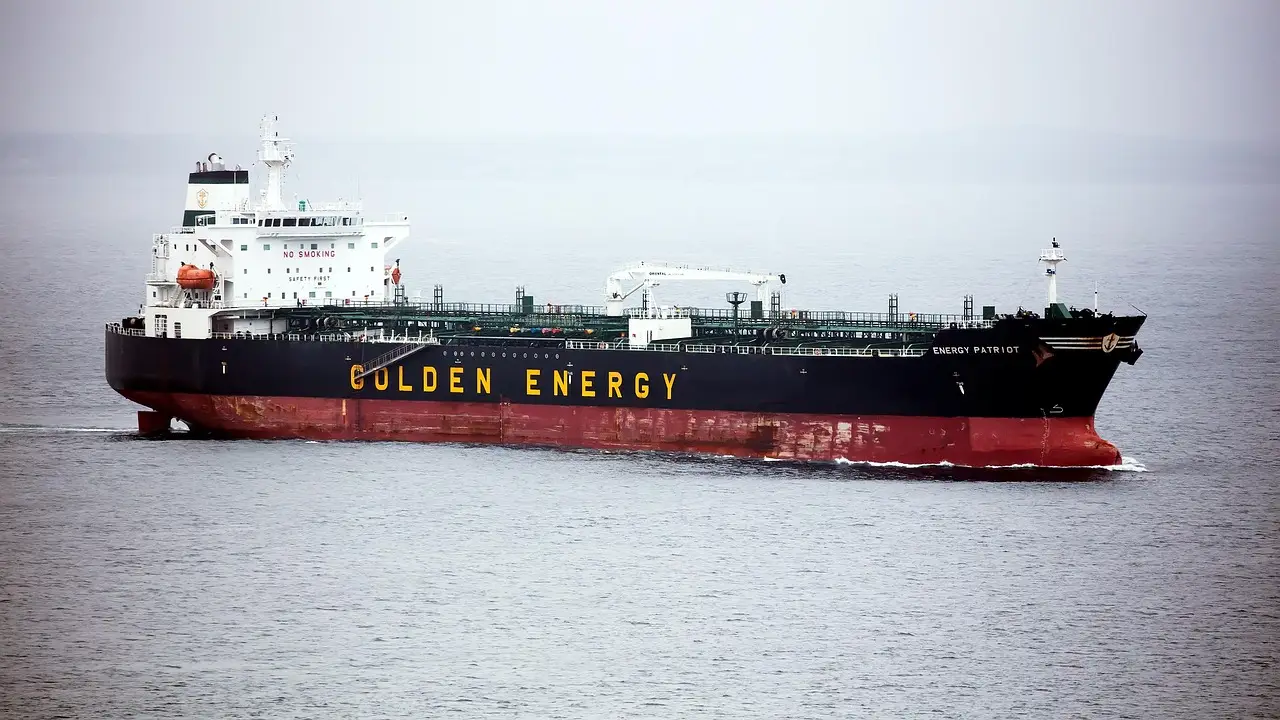
Five tankers are burning in and around the Strait of Hormuz after striking mines, according to competing statements from Iran's military services. Iran's Islamic Revolutionary Guard Corps Navy said two supertankers, escorted by US jets, hit mines in the southern part of the strait. Iran's army separately reported three tankers on fire east of the strait after mine strikes. The reports date from 19 November 2026.
The strait carries roughly a fifth of the world's seaborne oil. Any sustained disruption there touches every refinery that runs Gulf crude, from Jamnagar to Rotterdam. Five burning hulls in a single day is not a shipping incident. It is a hazard to navigation in the most congested crude corridor on the planet.
What exactly do the Iranian claims say?
The IRGC Navy's statement carries two assertions stitched together. First, that the two supertankers hit mines. Second, that they were travelling an "unauthorised route" under escort by US military aircraft.
The word "unauthorised" is doing heavy lifting. Shipping lanes through Hormuz operate under international transit norms, not Iranian licensing. By framing the escort and the route as irregular, the IRGC constructs a justification for the minefield's presence without quite claiming the mining itself.
The army's separate account of three tankers east of the strait points to mine danger outside the chokepoint proper, in the approach lanes to the Gulf of Oman. Taken together, the two claims describe mine contamination across both sides of the passage.
Iranian military statements are the only source cited in the reporting so far. Independent verification of vessel names, cargoes, and crew status is not yet available. Treat casualty and damage figures accordingly.
Who said what, and when?
- IRGC Navy: Two supertankers escorted by US jets ablaze in the southern Strait of Hormuz after hitting mines on an "unauthorised route."
- Iranian Army: Three tankers on fire after mine strikes east of the strait.
- Iranian President Masoud Pezeshkian: Accused Iran's enemies of waging "a cultural and economic war" to force the country to surrender. "We must continue on our path and not retreat," he said.
The president's remarks place the maritime incidents inside a broader confrontation narrative that Tehran is actively cultivating. That framing matters for anyone pricing war-risk premiums on Gulf charters.
What does this mean for tanker traffic and crude flows?
Supertankers do not stop on a dime, and neither do their insurance markets. Mine strikes in Hormuz historically trigger immediate consequences: war-risk cover tightens, owners reroute or pause sailings, and freight rates spike on the uncertainty alone.
Five burning vessels complicate the picture further. Rescue and firefighting operations inside a strait roughly 33 km wide at its narrowest point slow transits for everyone. Suezmax and VLCC operators will want mine-clearance assurances before committing hulls worth well over $100 million each.
Crude buyers should watch loading schedules at Gulf export terminals. Disruption does not need a closure to bite. Slower transits and hesitant owners can shave available supply just as effectively, and refiners running Gulf grades have limited short-term alternatives.
What comes next?
The watch items are concrete. Watch for independent confirmation of the vessels' identities and cargo volumes. Watch for the response of the US Navy's Fifth Fleet, which patrols these waters, to the escort claim. Watch for Lloyd's Market Association adjustments to Hull War risk listings for the strait.
Above all, watch whether mine strikes recur. One day of five burning tankers is a shock. A second day is a pattern, and patterns close waterways.
The plain takeaway: mines are now a demonstrated hazard in the world's most important oil corridor, and Tehran is framing the result as someone else's fault.
By Daniel Okafor
via aljazeera.com (Source)
More from Daniel Okafor
Show full bio
Market editor covering companies, deals and strategy in Oil and gas industry operations and markets at Rig & Refinery.
624 articles
Adjoining reports
- Six Tankers Struck by Mines in Hormuz; Brent Holds Mid-90s as Q4 Surplus Caps Rally
- Tankers ablaze in Hormuz as drone alert halts Iraq's Khor Mor gas field
- Hormuz conflict has killed 25 seafarers, IMO records show
- Iran keeps Strait of Hormuz shut pending seven US conditions
- Twelve Vessels Hit in a Week as Iran Intensifies Strait of Hormuz Strikes