Well report · filed November 22, 2026
Petroleum MarketsWell report
Hormuz tanker traffic falls as Iran hits 25 vessels in a week
Iran struck at least 25 tankers around Hormuz in a week; transits fell 15 percent, insurance hit 3.5-7.5 percent, and IEA counts 2.8 billion barrels of lost Gulf supply since February.
Field notes
- At least 25 tankers hit in and around the Strait of Hormuz in the past seven days
- Transits fell to 263 ships (Nov 12-18), down 15% week-on-week; oil tankers down to 37 from 52
- War-risk insurance rose from 0.10-0.25% pre-war to 3.5-7.5% of hull value
- IEA: cumulative losses of 2.8 billion barrels of oil and 60 bcm of gas from the Gulf
- Brent crossed $100/bbl before settling at $83, over $15 above pre-war levels
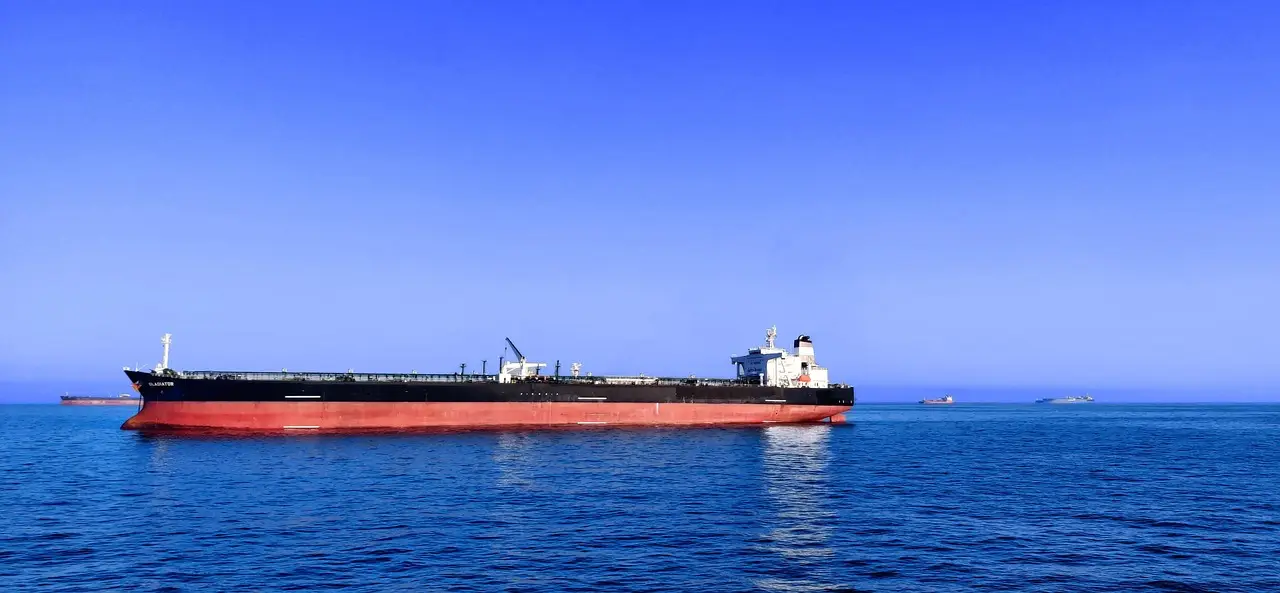
At least 25 tankers have been struck in and around the Strait of Hormuz in the past seven days, cutting traffic through the chokepoint that carries a fifth of global oil and gas to its lowest level since the war began in late February.
UK Maritime Trade Operations counted 263 ships transiting the strait between November 12 and 18 — 15 percent fewer than the previous week and 20 percent below the week before that. Only 37 of those vessels were oil tankers, down from 52 a week earlier. Before the war, roughly 135 ships passed through daily. UKMTO cautions the real figures may run higher, because shadow-fleet movements go unregistered.
For charterers and refiners, the numbers land where it hurts: freight and cover. The US maritime agency reported last week that insurance rates on Gulf passages have climbed from 0.10-0.25 percent of hull value before the war to 3.5-7.5 percent.
Where the attacks have hit
Bahrain has absorbed most of the recent escalation. The Islamic Revolutionary Guard Corps claimed a combined missile and drone operation against US positions at the al-Riffa and Awali bases, saying it destroyed two Patriot air defence radars. Manama reported an Iranian strike on a civilian industrial facility on Saturday, plus several thwarted attacks and three drone attacks in recent days after weeks of relative quiet.
Iranian state media said a US interceptor missile launched from the Fifth Fleet base crashed on Sitra Island near Manama, sparking a large fire. The IRGC framed the operation as retaliation for a US strike on a radar installation on Hengam Island, and Tehran justifies the broader campaign as a response to airspace violations by MQ-1 and MQ-9 drones.
Other claims are contested. Iran's army said its air defences damaged a US F-16 over the Gulf, according to IRNA — a claim CENTCOM denied, stating that "all US fighter jets in the Middle East are safe and accounted for." Iranian forces also said they downed an MQ-1 east of Hormuz on Sunday, which the IRGC called the 20th drone of that type lost since the war began, and the fourth in 24 hours. Last week, the army said it targeted US drone and missile installations at Kuwait's Ali Al Salem base, after a US strike on Qeshm Island.
British maritime authorities, meanwhile, logged two incidents of tankers struck by unidentified projectiles near Oman. Al Jazeera's Tehran correspondent, Resul Serdar, counted roughly 25 tanker incidents since November 14.
What the supply losses look like
The International Energy Agency said Thursday that cumulative losses from the conflict have reached 2.8 billion barrels of oil and 60 billion cubic metres of gas supply from the Gulf. Brent crossed $100 a barrel before settling at $83 — still more than $15 above pre-war levels. The IEA added that the conflict could cut world oil demand by more than 4 percent by 2035 if governments accelerate electrification, efficiency and fuel-switching in response.
Prices remain analysis rather than arithmetic: the direction depends on whether Hormuz traffic keeps falling.
Why Iran is escalating now
The strikes track the economic squeeze. The US naval blockade, overland trade disruptions and the August sanctions wave under Operation Economic Outcast are biting. Treasury Secretary Scott Bessent, who leads the sanctions regime, has said the embargo will contract Iran's economy by 25 percent by the year ending March 2027. President Masoud Pezeshkian calls it a "silent economic war."
Deputy Foreign Minister Kazem Gharibabadi told Iranian reporters: "We consider the economic siege a hostile act, and we will take any necessary measures to break this economic siege."
Rami Khouri, a public policy fellow at the American University of Beirut, reads the strategy as widening the war's cost base — to spread the pain "to include the entire [Gulf region] and, indirectly, global economies via higher shipping costs and stressed supplies of essentials." Iran's aim, he said, is to show Washington cannot protect its own or its allies' facilities, pushing Arab governments to press for an end to the war.
Is a wider confrontation coming?
Trita Parsi of the Quincy Institute sees the blockade as the tripwire. "If he continues the blockade, there will be escalation," he warned, adding that Trump would need to "slowly, perhaps imperceptibly, lift the blockade, as well as lift some of the sanctions" to exit without renewed fighting. Tehran University's Hassan Ahmadian framed it as binary: if Washington lets the tankers pass, the blockade "ends without an agreement or war"; if it attacks them, Iran's responses "will be difficult for [Trump] to avoid."
Trump said Saturday he has plans for a "permanent" deal preventing an Iranian nuclear weapon, and told Fox News he was never much interested in regime change, calling Iran's new leadership "more rational."
The watch items are the weekly UKMTO transit count and whether war-risk premiums break above the current band.
via aljazeera.com (Source)
More from James Calloway
Show full bio
Staff writer covering people, launches and day-to-day practice in Oil and gas industry operations and markets at Rig & Refinery.
648 articles
Adjoining reports
- Six Tankers Struck by Mines in Hormuz; Brent Holds Mid-90s as Q4 Surplus Caps Rally
- Hormuz conflict has killed 25 seafarers, IMO records show
- Oil Holds Near $115 as Hormuz Attacks Test Market Before Midterms
- Gulf Producers Keep Crude Moving Through Iran Conflict
- Hormuz Tanker Threats Put Fresh Crisis Risk On Global Oil Market