Well report · filed November 27, 2026
Upstream Drilling & ProductionWell report
Iraq closes two crossings as Trump backs oil-smuggling crackdown
Baghdad closed crossings with Syria and Iran after placing northern oil fields under federal control, citing an estimated $100bn in smuggling losses ahead of Dec. 1 talks.
Field notes
- Baghdad closed two northern crossings on Thursday, one with Syria and one with Iran.
- Iraq estimates smuggling cost the treasury $100 billion from 2008 through 2025.
- The top court ruled Wednesday that federal forces can deploy at all international borders.
- Al-Zaidi moved border crossings and several oil fields under federal control on Tuesday.
- A meeting between Iraqi and Kurdish authorities is set for Dec. 1 in Baghdad.
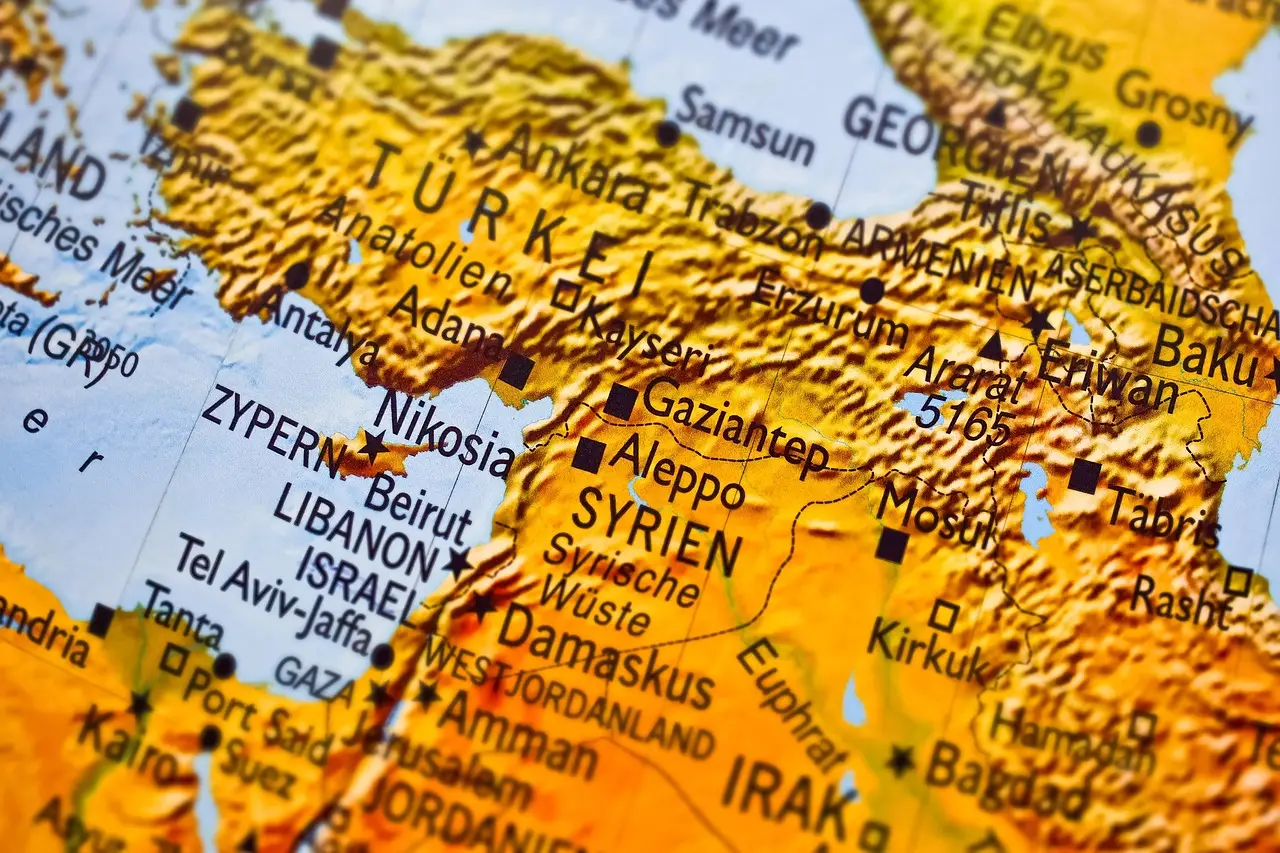
Iraq closed two northern border crossings on Thursday—one with Syria and one with Iran—and estimates oil smuggling through the Kurdistan Region cost the national treasury $100 billion between 2008 and 2025.
The closures followed Prime Minister Ali al-Zaidi’s Tuesday move to place the Kurdish region’s border crossings and several oil fields under federal control. Iraq’s highest court ruled Wednesday that federal forces may deploy along all international borders, including the Kurdistan frontier. Reuters said it was unclear how Baghdad calculated the $100 billion estimate.
Who controls northern crude exports and revenue?
Haider al-Aboudi told the Iraqi News Agency (INA) that Baghdad considers crude exports bypassing state marketer SOMO to be smuggling because the proceeds do not reach the treasury. His definition puts export authorization and payment collection at the center of the federal action.
The announcement did not identify the affected fields, disclose barrels per day, quantify throughput at the two crossings or set a schedule for federal control. It also announced no refinery or terminal change. The immediate operating variable is authorization and payment for northern exports rather than a stated change in drilling or production capacity.
In practice, Baghdad is trying to place both the route and the revenue from northern crude under federal control.
Why did Washington back the move?
President Donald Trump said in a Truth Social post on Friday that Washington supports al-Zaidi’s efforts to “stop the smuggling of Iraqi oil, end corruption, and bring all weapons under the exclusive control of the state.” He said the United States wants a united, prosperous and strong Iraq that makes its own political decisions.
Agence France-Presse reported that al-Zaidi has steered Iraq closer to Washington, although his drive risks antagonizing both the Kurds and Iran. The U.S. endorsement places the federal move within a broader policy toward Baghdad and Tehran, but the announcement did not set out how federal control would operate at the crossings or fields.
Oil Minister Basim Mohammed said the oilfields in the Kurdish region and Basra belong to all Iraqis and remain under the Iraqi flag. He also told INA that Iraq would not show leniency toward crude exported outside legal channels.
Washington has backed the principle of federal control, leaving the practical terms to Baghdad, Erbil and the Iraqi courts.
Why is Erbil resisting federal control?
Kurdistan Regional Government spokesman Peshawa Hawramani said the region does not want clashes with Baghdad but considers the central government’s actions a restriction on the semi-autonomous region and a violation of its constitutional rights. The KRG rejected what it called military language and threats from the Iraqi military spokesman on Wednesday and said it was working with federal authorities to combat corruption. Thousands of Kurds protested on Thursday.
Al Jazeera’s Mahmoud Abdelwahed, reporting from Erbil, said residents fear for their livelihoods if Baghdad takes over the region’s oil infrastructure and described a trust deficit between the two governments. The KRG denies any illicit oil operations and calls the campaign an attempt to undermine Kurdish constitutional and territorial rights.
The campaign also overlaps with a security move announced a week earlier. Al-Zaidi ordered the army to prepare to enter Jurf al-Sakhar, south of Baghdad, where the government accuses the Iran-backed Kataib Hezbollah of running a smuggling operation. No volume for the disputed infrastructure was provided, so the operational scale of the alleged crude flows remains unquantified.
The confrontation now concerns Kurdish constitutional authority and local revenue as much as the alleged smuggling.
What can the Dec. 1 meeting resolve?
A meeting sponsored by the head of Iraq’s Supreme Judicial Council is set for December 1 in Baghdad. Abdelwahed said a failure or stall could lead to a wider constitutional and political conflict between Baghdad and the KRG.
Sajad Jiyad, an analyst at the Center for International Policy, said al-Zaidi’s strategy is aligned with what America wants for Iraq and its policy toward Iran. Cutting off oil flow, he said, is “exactly what US policy is right now: maximum pressure through economic blockade.” That interpretation remains the analyst’s assessment of Washington’s objectives rather than a published U.S. enforcement plan.
Trump has also welcomed al-Zaidi at the White House and described the Iraqi prime minister as a fighter and strong supporter of America. For oil traders, the immediate questions are whether federal notices will change export documentation, how SOMO will receive payments and whether operators retain physical access to the Syria and Iran crossings. The source did not specify measures on any of those points.
The Dec. 1 meeting, and any published enforcement rules for the crossings and fields, are the next operational checkpoint.
via aljazeera.com (Source)
More from James Calloway
Show full bio
Staff writer covering people, launches and day-to-day practice in Oil and gas industry operations and markets at Rig & Refinery.
672 articles
Adjoining reports
- Baghdad moves on Kurdish refinery control as 20% of reserves hang in balance
- Baghdad Moves on Kurdish Oil, Crossings as Court Backs Federal Control
- Baghdad Moves to Seize Kurdish-Controlled North Oil Company Fields
- Baghdad Seizes Kurdish Region's Oil and Border Controls
- Iraq's Top Court Hands Baghdad Control of Kurdish Borders, Oil Fields