Well report · filed November 25, 2026
Upstream Drilling & ProductionWell report
Iraq's Top Court Hands Baghdad Control of Kurdish Borders, Oil Fields
Iraq's Federal Supreme Court ruled Baghdad may deploy troops to Kurdish-held borders and audit oil and gas fields, a day after al-Zaidi ordered seizures of KRG crossings to curb smuggling. No implementation plan was given.
Field notes
- Iraq's Federal Supreme Court ruled on Wednesday that federal forces may deploy to international borders, including Kurdish-held crossings.
- The ruling came one day after PM Ali al-Zaidi ordered federal forces to take over Kurdish-run border crossings and Kurdish-held oil fields.
- A federal intelligence report cited by Iraqi state media says North Oil Company crude is smuggled from Kirkuk and Sulaimaniyah to Iran and onward to Afghanistan.
- The court gave the federal oil ministry oversight and audit powers over oil and gas fields, with shared production management with regions.
- The Iraqi government has specified no date or mechanism for implementing the takeover.
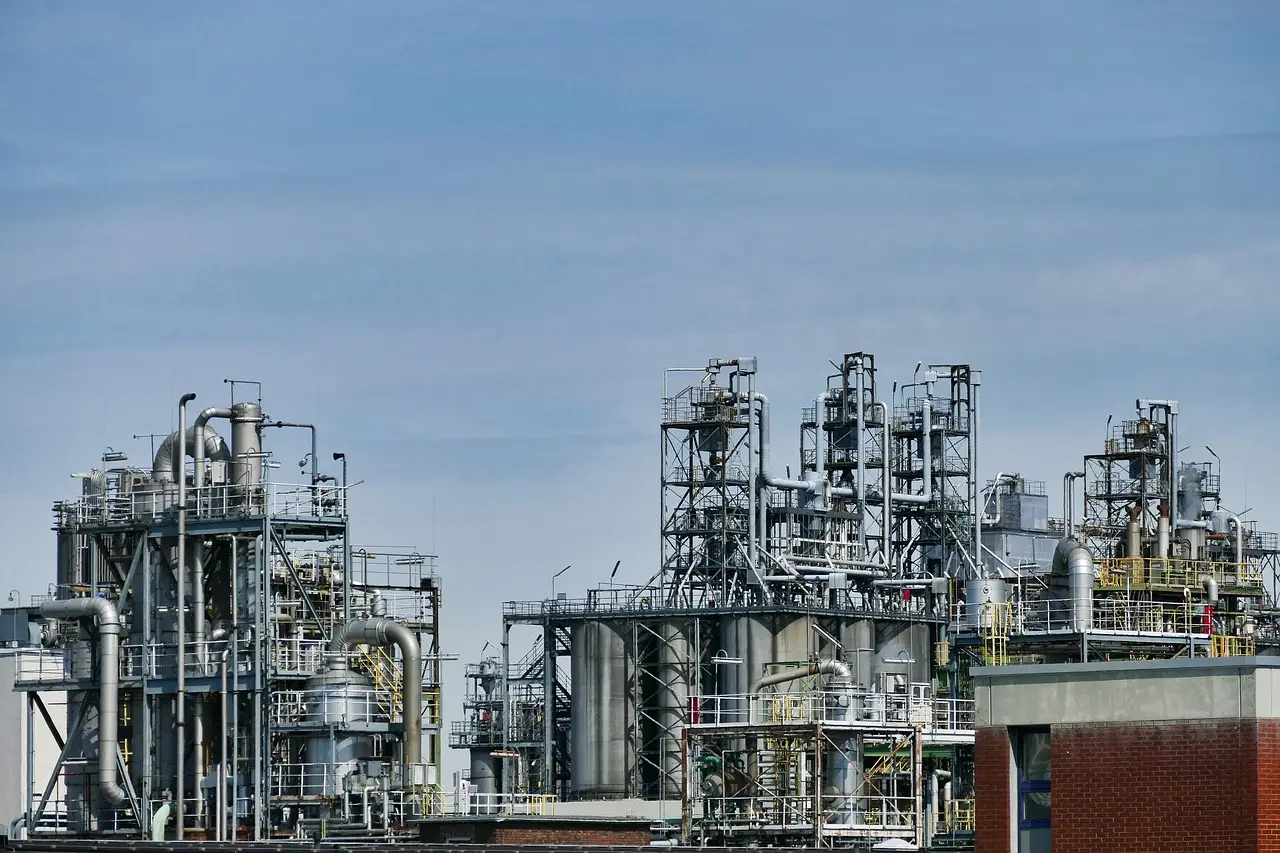
Iraq's Federal Supreme Court ruled on Wednesday that the federal government may deploy troops to all international borders and oversee oil and gas fields nationwide, including those under Kurdish regional control. The decision lands one day after Prime Minister Ali al-Zaidi ordered federal forces to seize Kurdish-run border crossings and demanded authority over fields held by Kurdish security forces.
The target, according to Baghdad, is oil smuggling. The court ruled that federal authorities may supervise agencies operating at every border crossing, including those in northern Iraq's semi-autonomous Kurdish region, though they must coordinate with regional and provincial governments on customs administration, state television reported.
What does the ruling actually cover?
Three things, on paper at least:
- Federal troops may deploy to Iraq's international borders, including Kurdish-held frontier posts.
- Federal authorities may oversee all agencies at all border crossings, with a coordination duty on customs.
- The federal oil ministry may oversee and audit oil and gas fields, with Baghdad sharing production management responsibility alongside regional governments and producing provinces.
The Iraqi government did not specify how or when it would implement any of this. That omission is the whole story, in practice.
The Kurdistan Regional Government rejected what it called "military language and threats" in the Iraqi military's statement announcing the measures. It said it was cooperating with federal authorities to combat corruption and called for an end to oil smuggling across Iraq.
How much crude is at stake?
Iraq's state news agency, citing what it described as a federal intelligence report, said oil belonging to the state-owned North Oil Company was being diverted and smuggled from Kirkuk and from Sulaimaniyah, inside the Kurdish region, to Iran and onward to Afghanistan. The report gave no volumes. For a frame of scale, Kirkuk's fields historically produced several hundred thousand barrels per day under North Oil Company operations, so even modest diversion from that complex is material by regional standards.
The KRG has denounced Baghdad's moves. The regional government called the takeover attempts an "assault" on the region's "constitutional rights" and had earlier branded them unconstitutional.
Who is behind the centralisation drive?
The ruling is the second front opened by al-Zaidi in a week. He has also moved against Kataib Hezbollah, a powerful Iran-aligned Shia militia, following oil smuggling allegations. The prime minister ordered troops to prepare to enter Jurf al-Sakhar, a Kataib stronghold south of Baghdad. The group responded with defiance, then allowed soldiers into the city under a compromise brokered by Shia politicians.
A senior Shia politician close to al-Zaidi told Reuters the prime minister was trying to dismantle the model of a "state within a state". The politician said al-Zaidi aims to restrain armed factions operating above state authority and to draw clearer limits on the Kurdish region's authority over strategic economic and security matters.
Renad Mansour, deputy director of the Middle East and North Africa programme and director of the Iraq Initiative at Chatham House, said Iraq's judiciary was "very much supportive" of the government's campaign to build a centralised political order.
"The Iraqi government [is] trying to reclaim some sovereignty … because it's such a fragmented state where there isn't a centre," Mansour said.
Analysts note the court's decision reads as a victory for al-Zaidi on paper, but enforcement against the Kurds and heavily armed Iran-aligned Shia militias will be considerably harder than the judgment itself.
What happens next?
No timeline, no mechanism, no deployment schedule has been published. The gap between a ruling in Baghdad and a checkpoint outside Erbil is where this file will be decided.
In a separate development on Wednesday, the Syrian and Iraqi defence ministers discussed "several issues of mutual interest" by telephone, according to Syria's Ministry of Defence. Baghdad offered no further detail.
The watch item is implementation. Watch for the first federal audit of a Kurdish-operated field, the first customs handover at a KRG crossing, and any reaction from operators holding contracts with the regional government.
via aljazeera.com (Source)
More from Daniel Okafor
Show full bio
Market editor covering companies, deals and strategy in Oil and gas industry operations and markets at Rig & Refinery.
642 articles
Adjoining reports
- Iraq orders federal takeover of oilfields in Kurdish-controlled areas
- Baghdad Seizes Kurdish Oil Exports; Argentina LNG Clears for $50.75 Billion FID
- Iraq closes two crossings as Trump backs oil-smuggling crackdown
- Baghdad Moves to Seize Kurdish-Controlled North Oil Company Fields
- Baghdad Moves on Kurdish Oil, Crossings as Court Backs Federal Control