Well report · filed November 24, 2026
Gas & LNGWell report
Methane Pioneer's 1959 LNG Cargo Site Rediscovered on Calcasieu River
The Methane Pioneer sailed from Louisiana in 1959 with the first ocean-going LNG cargo. A historian has now located the long-lost Calcasieu River terminal where it loaded.
Field notes
- The Methane Pioneer carried the first ocean-going LNG cargo in 1959, from southwest Louisiana.
- The original loading terminal sat on the Calcasieu River and was lost to record for more than 60 years.
- Historian Elwin Taylor's research relocated the site, detailed on the OGJ ReEnterprised podcast.
- Today's multibillion-dollar LNG developments rise about 2 miles from the original terminal site.
- Shale production, market economics and larger carriers made the US the world's largest LNG exporter.
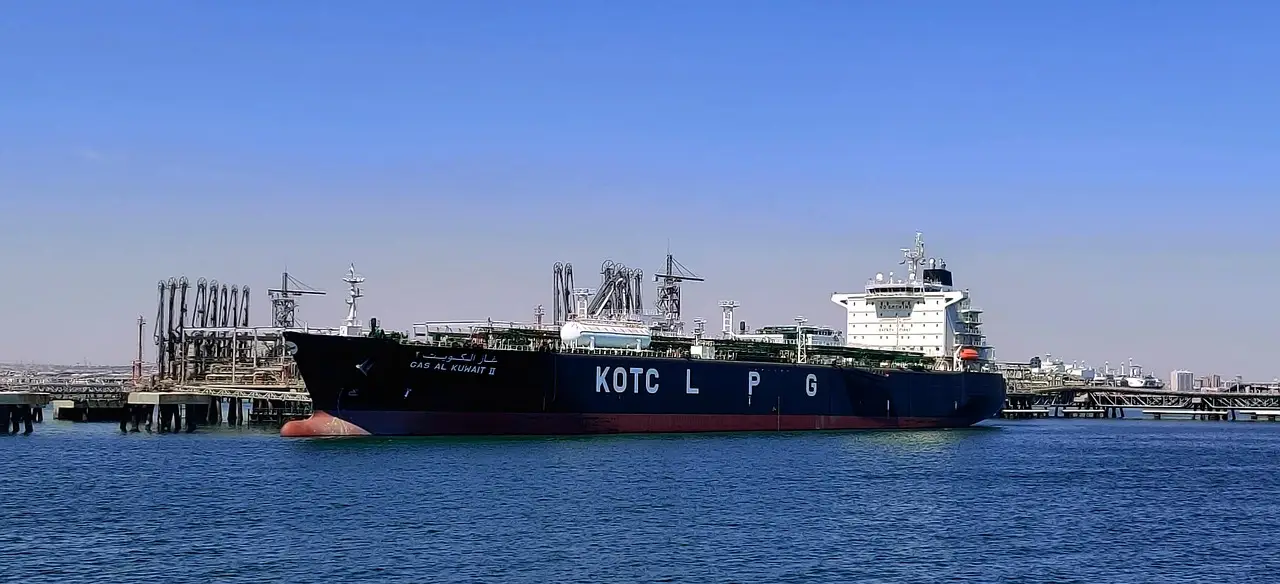
In January 1959, the Methane Pioneer sailed from southwest Louisiana with roughly 2,000 tons of chilled methane (liquefied natural gas, or LNG — natural gas cooled to about −160° C so it shrinks to 1/600th of its volume for shipping). The vessel carried the first ocean-going LNG cargo in history. That single voyage proved natural gas could cross the sea safely and opened a trade now worth hundreds of billions of dollars a year.
Yet the place where it all started stayed lost for more than 60 years.
The rediscovery is the subject of the latest "Then & Now" episode of the Oil & Gas Journal ReEnterprised podcast, in which OGJ Statistics Editor Laura Bell-Hammer interviews Elwin Taylor, a historian of liquefied gas shipping. Taylor's research pinpointed the original LNG loading terminal on Louisiana's Calcasieu River, the waterway that anchors the Gulf Coast's gas export infrastructure today.
Why does a forgotten dock matter?
The industry rarely marked the spot. The Methane Pioneer loaded its cargo on the Calcasieu in 1959, but the exact terminal site slipped out of institutional memory as the pioneering projects of the era wound down. Taylor traced the location through historical records, restoring a geographic anchor to an industry origin story.
The finding carries more than antiquarian weight. Southwest Louisiana is now the centre of US LNG export capacity, and modern multibillion-dollar LNG developments rise roughly 2 miles from where the Methane Pioneer took on its first cargo. The industry's beginning and its present-day scale sit within sight of each other on the same river.
How did one voyage become a global trade?
The podcast walks through the sequence that followed. The 1959 crossing demonstrated the engineering: insulated tanks, controlled boil-off (gas that evaporates from storage and must be managed or consumed), and cargo handling at berth. Those early experiments made ocean transport of LNG commercially conceivable.
Yet the first commercial LNG trade did not develop in the United States, as Bell-Hammer and Taylor discuss. Market conditions pushed the initial commercial contracts abroad, and the US spent decades as an LNG importer rather than exporter, a reversal that persisted into the 2000s before shale gas upended the balance.
The turn came with three forces the episode examines:
- Shale gas production. Horizontal drilling and hydraulic fracturing (the injection of fluid to fracture tight rock and release gas) unlocked supply volumes that domestic demand could not absorb.
- Changing market economics. Abundant feedstock gas at Henry Hub-linked prices made US liquefaction projects competitive against incumbent suppliers.
- Larger, more flexible carriers. Modern LNG vessels with greater capacity and the ability to serve multiple destinations replaced the fixed-point trade of the early decades.
The result: the United States is now the world's largest LNG exporter, a status the country reached within a single generation of its first import terminals.
What is the takeaway?
The Calcasieu River has hosted the LNG industry from its first proof cargo in 1959 to today's export megaprojects. Taylor's rediscovery of the original loading terminal closes a 60-year gap in the record.
The watch item is continuity. Developments rising 2 miles from the Methane Pioneer's berth are the same trade that 1959 voyage started — now measured in cargoes per week rather than one pioneering crossing. The river, the cargo, and the industry's centre of gravity have not moved; only the scale has.
Laura Bell-Hammer has led Oil & Gas Journal's global data coverage and analytical reporting for more than 30 years. She previously served as OGJ's Survey Editor and contributed to Oil & Gas Financial Journal before that publication ceased in 2017. Before joining OGJ, she built her industry foundation at Vintage Petroleum in Tulsa. She holds a Bachelor of Science in Business Administration from Oklahoma State University.
via Oil & Gas Journal (Source)
More from Olivia Hart
Show full bio
Correspondent covering technology and product news in Oil and gas industry operations and markets at Rig & Refinery.
633 articles
Adjoining reports
- Ten Years On From First Sabine Pass Cargo, U.S. LNG Exports Still Climbing
- Louisiana Coastal Gas Terminal Poised to Become Largest in US
- First LNG Cargo Produced at Corpus Christi Stage 3
- First LNG Cargo From Mexico's Costa Azul Departs for South Korea
- US LNG Exports Hit 15.1 Bcf/d as Strategy Meets Its Limits