Well report No. RR-5352 · T14N · R49W · SEC 14 · filed October 30, 2026
Petroleum MarketsWell report
Ice Wall at Vilkitsky Strait Tests Russia's Arctic Oil Shortcut
Sanctioned tankers sat two weeks at the Vilkitsky Strait as NSR volumes hit 20 million barrels, up 50% — yet barely 1% of Russia's seaborne oil exports.
Field notes
- About 20 million barrels of crude moved the full NSR to Asia by mid-October 2025, a 50% increase on 2025's pace — roughly 1% of Russia's seaborne oil exports.
- Sanctioned tankers stuck near the Vilkitsky Strait in July waited up to two weeks; only one vessel got through.
- Putin said 37 million tons of cargo moved along the route in 2025 and predicted the figure would almost double by 2030.
- South Korea's first container ship transited the NSR on October 22; China ran its first scheduled container service this year.
- Western sanctions hamper construction and maintenance of Arctic-capable vessels, Ambrey analyst Tomas Alexa said.
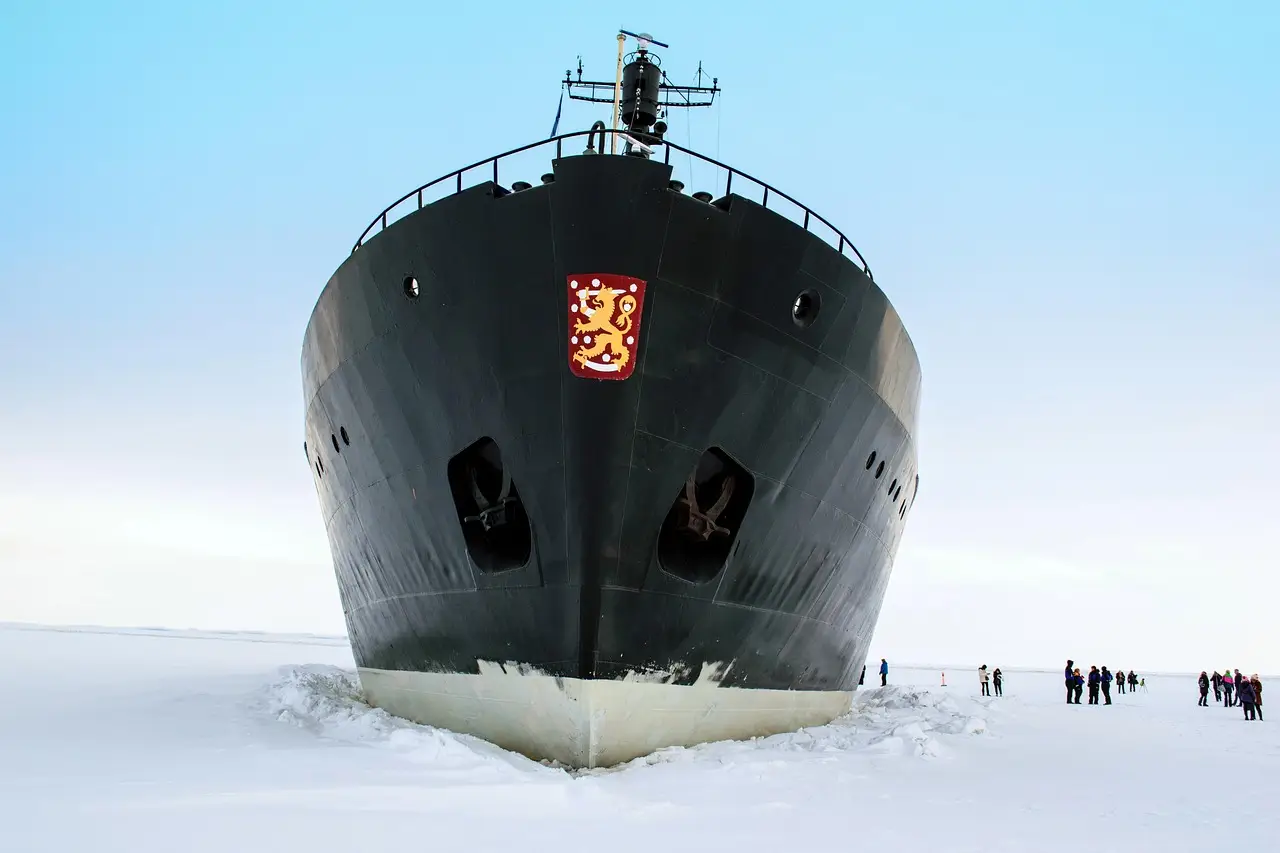
Roughly 20 million barrels of crude had moved the full length of Russia's Northern Sea Route to Asian buyers by mid-October — a 50% jump on 2025, and still only about 1% of the country's total seaborne oil exports. That tension between a genuine surge and a small base is the story of the NSR this year, and July gave it a physical shape: a wall of packed ice in a 55-kilometer strait.
What happened at the Vilkitsky Strait?
A group of sanctioned Russian tankers dropped anchor roughly 1,300 kilometers north of the Arctic Circle in July after getting stuck near the Vilkitsky Strait, the choke point between the northern Siberian coast and Bolshevik Island. Two nuclear-powered icebreakers were several days' voyage away. The ships hunkered down for a long wait.
Only one tanker made it through the strait. The others waited up to two weeks for the icebreakers, still couldn't force the passage, and eventually took a different route.
The Kremlin has bet heavily on the route — farther from Ukrainian drone attacks and European interdiction of shadow fleet vessels — and crude oil and LNG volumes moving on it hit records this year. July was a reminder that records don't guarantee passage.
Does less ice mean easier sailing?
No, and that's the point environmental group Bellona keeps making. "That is a good example of one of our main messages: that less ice doesn't mean easier navigation," Ksenia Vakhrusheva, head of the Arctic project at the Lithuania-based group, told RFE/RL.
"When the ice is melting, some parts are breaking and floating, and sometimes it happens that in certain places, especially in narrow straits, this ice gets packed, and a ship without an ice class cannot go through," she said. Russia's shortage of ice-class tonnage is one of several constraints on the route despite bullish official rhetoric.
What do the cargo numbers actually show?
President Vladimir Putin, speaking last month at the launch of the flagship Vostok Oil project on the Taimyr Peninsula just south of the strait, called the NSR "a reliable and safe path to the world's largest markets." He said 37 million tons of cargo had moved along the route in 2025 — though not its entire length — and predicted the figure would "almost double" by 2030. Back in 2019, Kremlin officials were chasing 80 million tons by 2024.
The Norway-funded Center for High North Logistics reported that by the end of September Russia had shipped some 2 million tons of primarily crude-oil cargoes, about 15 million barrels, along the entire route to China and other Asian destinations, mostly from the Barents Sea port of Murmansk. Reuters, citing traders and shipping data, put the figure at 20 million barrels by mid-October.
"There is definitely a surge of developments there. However, it's from a relatively low base," Tomas Alexa, senior analyst at maritime security consultancy Ambrey, told RFE/RL. He added that Western sanctions seriously hamper Russia's ability to build and maintain Arctic-capable vessels and infrastructure: spare parts and construction materials often move through third parties, and Norwegian, Danish, and Dutch firms that once handled repairs no longer will.
Who else is using the route?
Beyond Russian energy exports, other nations are testing the waters:
- On October 22, South Korea reported its first container ship had transited the route, praising it as a shortcut to Europe while noting difficult conditions, including large ice floes in the Bering and Vilkitsky straits.
- China this year ran its first scheduled container service to Europe on the NSR, completing several voyages.
Catherine Sendak, head of the Transatlantic Defense and Security program at CEPA, flagged open questions about tolls and what services Russia would provide transiting commercial vessels. "I don't think there are good answers to that right now," she said.
What's the watch item?
Militarization is accelerating in parallel. A CEPA report in September said "Russia is turning the Arctic into a fortress." EU foreign affairs chief Kaja Kallas, outlining a new Arctic strategy on October 21, called the region "a front line of global power competition." NATO launched its Arctic Sentry mission in February, and Washington announced plans last month to expand its military footprint in Greenland.
Bellona, meanwhile, warns that Russia publishes no incident data for the route and that an Arctic spill would degrade far more slowly than in warmer waters. Watch whether Russia hits its doubled cargo target — or hits more ice.
via rferl.org (Original)
More from Elena Vasquez
Show full bio
News editor covering technology and product news in Oil and gas industry operations and markets at Rig & Refinery.
555 articles
Adjoining reports
- Russian Crude Exports Stay 10% Below Pre-War Levels, UBS Says
- Russia's Seaborne Crude Exports Slip to 3.13 Million bpd
- Brent at $106: Why Standard Chartered Sees No New Russian Barrel
- Trans-Caspian Oil Pipeline Back on the Table as Risk Map Shifts
- Gulf oil keeps flowing through Iran conflict, but war costs mount