Well report · filed November 24, 2026
Upstream Drilling & ProductionWell report
Petrobras puts $122bn behind pre-salt barrels through 2031
Petrobras's board approved $122 billion for 2027-2031, with 60% of upstream funding aimed at pre-salt fields, 3.2 mboe/d output and 2.17 million bpd of refining capacity.
Field notes
- $122 billion investment programme for 2027-2031, approved by Petrobras's board of directors
- 60% of E&P implementation funding directed to Brazil's pre-salt fields
- Production forecast at 3.1 mboe/d in 2027 and around 3.2 mboe/d for 2028-2031, with oil and NGL up to 300,000 bpd versus the previous plan timeframe
- Refining capacity to rise from 1.81 million barrels per day to 2.17 mbbl/d by 2031
- Operating cash flow forecast at $230-250 billion, with ordinary dividends of $55-60 billion subject to financial performance and leverage targets
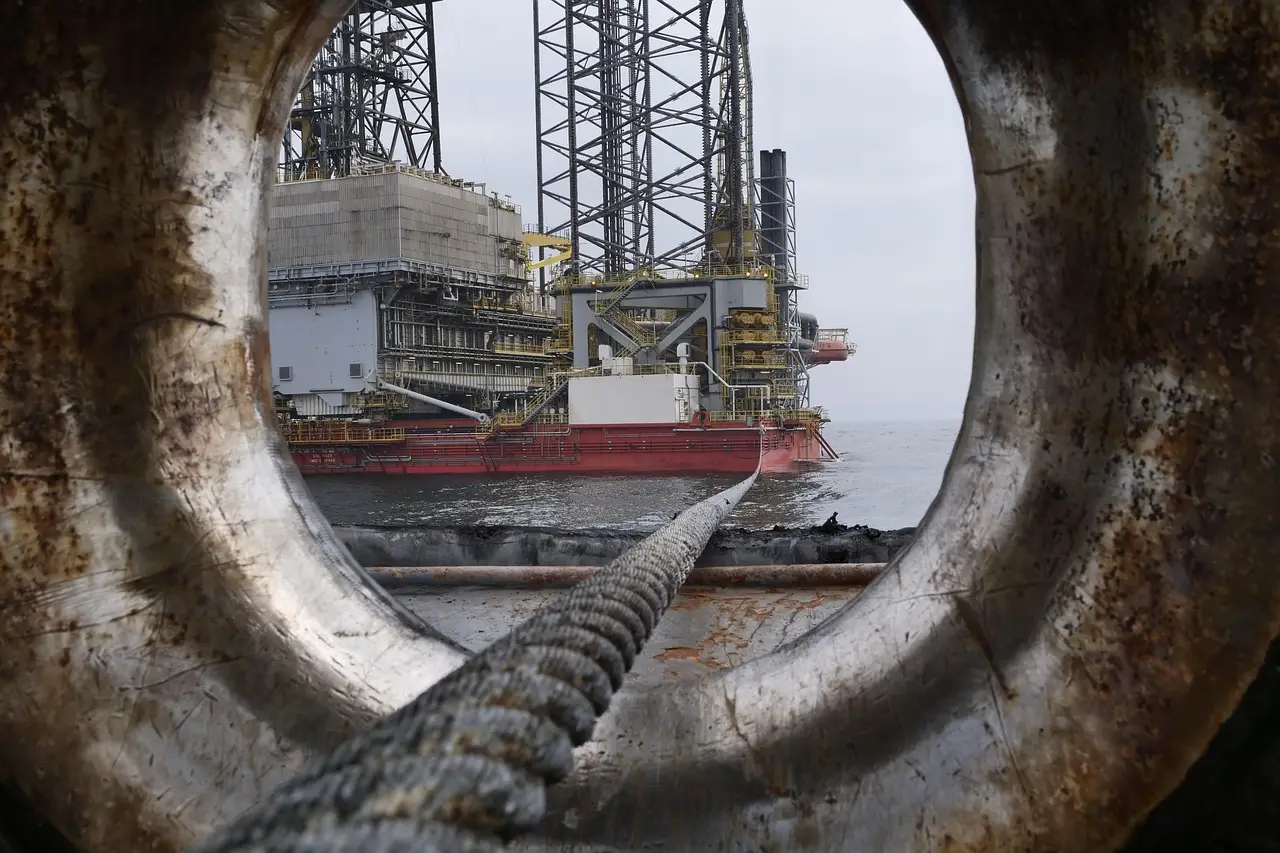
Petrobras's board has approved a $122 billion investment programme covering 2027 through 2031, with more than 70% of the cash going to exploration and production (E&P, the upstream hunt for oil and gas).
What does the $122 billion buy?
The Brazilian state oil company splits the programme into two pots, with the larger holding committed to work already selected and the smaller covering opportunities still being appraised. Petrobras assigned $113 billion to an implementation portfolio of projects it has already chosen. It put another $9 billion into an under-evaluation portfolio for less mature opportunities. Investment projections carry a ±5% variation margin, so the headline number can move either way.
Inside E&P, $83 billion backs current projects and $3 billion goes to initiatives still under evaluation. Sixty percent of implementation funding targets Brazil's pre-salt fields, the deep carbonate reservoirs beneath the continental shelf that carry most domestic output. The balance is spread across post-salt fields, exploration, onshore and shallow water, international projects, and decarbonisation.
The arithmetic holds. $113 billion plus $9 billion equals $122 billion, and the $86 billion E&P line matches the greater-than-70% upstream share.
Takeaway: most of the money is tied to selected work; the $9 billion under evaluation is not.
How much production does the money buy?
Petrobras forecasts commercial oil and gas production of 3.1 million barrels of oil equivalent per day (mboe/d, barrels of oil and gas combined on an energy-equivalent basis) in 2027, rising to around 3.2 mboe/d between 2028 and 2031.
Oil and natural gas liquids (NGL, the light hydrocarbon fraction separated from gas) hold at 2.9 million barrels per day across the period, an increase of up to 300,000 bpd against the previous plan timeframe, a comparison the release does not date. The plan funds nine new production systems and around 50 complementary projects, which Petrobras says will contribute nearly 10% of average production through approximately 100 new wells.
What the release does not give is a schedule. No field names. No sanction dates. No startup years for those nine production systems, which the plan mentions only in the context of exploration drilling across several Brazilian basins and abroad.
Takeaway: the volumes are clear, the delivery calendar is not.
What did the CEO commit to?
Petrobras CEO Magda Chambriard said: "This is an ambitious plan that will be implemented responsibly. This means capital discipline and rigour in every decision." She added: "We will invest in projects that continue to deliver positive returns even under the most challenging scenarios, all supported by a robust governance framework for project approval."
The language is reassuring, and it sets no hurdle rate. The release publishes no oil price assumption, so the returns test she describes cannot be checked against a stated deck.
Takeaway: capital discipline is promised, but not quantified.
What sits downstream of the wellhead?
Petrobras allocated $24 billion to refining, transport, marketing, petrochemicals and fertilisers, including refinery capacity expansion and logistics investment. Installed refining capacity rises from 1.81 million barrels per day to 2.17 mbbl/d by 2031, an increase of 360,000 barrels per day. The downstream slate also adds S-10 diesel production, new pipelines and vessels.
Exploration accounts for $10 billion, covering about 50 wells in several Brazilian basins and overseas. Decommissioning of mature assets takes $11 billion, more than the exploration budget and a reminder that the pre-salt build carries a retirement cost.
Takeaway: downstream spending expands refineries, while exploration and decommissioning together absorb $21 billion.
How much of the gas and low-carbon spend is committed?
Gas and low-carbon energies receive $8 billion, split equally between the implementation portfolio and the under-evaluation portfolio, which puts $4 billion on each side. Separately, Petrobras plans $13.5 billion in total for low-carbon solutions, decarbonisation and research.
Those two figures do not reconcile on the face of the release, and no low-carbon project gets a name, a capacity target or a date. Read the $8 billion as the gas allocation and the $13.5 billion as the broader decarbonisation envelope, but the company itself does not draw that line.
Takeaway: the low-carbon headline stays broad and unbooked by project.
What funds the plan, and what gets paid out?
Petrobras projects operating cash flow (OCF, cash generated from operations before financing and tax) of $230 billion to $250 billion over 2027-2031, with ordinary dividends of $55 billion to $60 billion anticipated subject to financial performance and leverage targets.
That dividend range is contingent rather than promised, and the release names no leverage threshold, so outside investors cannot test it. The $20 billion spread on the cash flow band is roughly 9% of its midpoint.
Takeaway: cash generation is forecast, distributions are conditional.
What to watch
The number to watch is the first-year profile of the ±5% margin, because a $122 billion envelope absorbs a wide range of outcomes. Then watch the sanction and startup dates for the nine new production systems, the delivery of the 2.17 mbbl/d refinery expansion, and each dividend decision, which rests on leverage targets Petrobras has not disclosed.
via Offshore Technology (Source)
More from Priya Raman
Show full bio
Senior reporter covering technology and product news in Oil and gas industry operations and markets at Rig & Refinery.
672 articles
Adjoining reports
- BP Weighs Bumerangue Stake Sale to Petrobras as CO2 Questions Loom
- Petrobras plans $23 billion to lift refining capacity to 2.173 million b/d
- Petrobras Signs SBM Offshore for Two FPSOs Backing $12 Billion Sergipe Push
- Brazil Bets 30 Billion Barrels on Equatorial Margin Expansion
- Venezuela's 65 Billion Barrels Anchor Case For Oilfield Services Stocks